• Skip to main content
  • Skip to footer

Care Training Online

Enabling Caregivers To Be The Best They Can Be

  • Home
  • About
  • Topics
  • Pricing
  • Blog
  • Dementia eBook
  • Testimonials
  • Login
  • Contact

Leigh Kelly

Developing Your Front Line Leaders

by Leigh Kelly

Developing Your Front Line LeadersWho are these people, the “front line” leaders?

Well those are the ones who get their hands dirty. The people at the coal face who have to implement what is filtered from the top down.

How well do you know these people? Is what is being sent down for implementation feasible or even practical?

Are you overloading the front line leaders so they burnout, become dissatisfied and give up and leave?

How well do you listen to the people at the coalface or even ask for their opinion or input? Do you sit in your ivory tower and send down yet another compliance issue for implementation?

It’s Different At The Top

Why do I ask this?

Well it is very easy to sit at the top and deal with another compliance issue.

You can see all the implications of not implementing it… but have you actually worked at the coalface?

You Have To Understand Your Employees

Have you ever been the one who has to deal with all the complex issues that come up on a day to day basis that disrupt your day?

Have you ever been a manager at the beck and call of everyone in sundry –the staff, residents, families, auditors, regulatory bodies, visitors, prospective new clients… and everyone that walks in the front door of the facility?

Have you even been a caregiver who has to work to the demands of the client, family, registered, nurses, managers, other caregivers, cook, cleaner, laundry person… ?

If you haven’t then I suggest that before you send down the next directive you have a little thought for the person or people you are expecting to implement the directive.

Why Is The Front Line Important?

So why am I talking about this? Well my team and I talk to a lot of people around the country who are these people – those at the frontl ine.

Many of these would love to have Care Training Online available to use but they can’t because those who sit in their ivory towers say No.

Why do they say No?

Well I don’t really know but what I have discovered are the following possible reasons:

  • Money
  • Power and control – you must do as I say
  • Lack of understanding of the life of a front line manager
  • Poor communication skills
  • And many more reasons known only to those at the top

Where Is Your Time Spent With Your Managers?

From these possible reasons we can gather that all the power is at the top with none of it coming down to other employees.

But you see, if you spend more time training your managers to be managers…

Then they have more skills in their toolbox to discuss things with you.

These skills are so lacking among front line managers who have just drifted into the job because they are a nurse or a caregiver who is perceived to have the skills necessary.

Until they take on the job… and frequently crash and burn as a result.

Spend Your Time Wisely

If you spend more time thinking about “how can I save my manager or frontline worker time”…

And “Is it feasible or workable to ask them to do this?”

Rather than throwing more at them to do without thinking about it…

There may just not be a constant stream of new managers needing training.

If you spend more time thinking about how you can get consistency across the organization and less time about sending yet another directive or saying No to something that would work for the front line manager and make life easier for them…

If you stop and listen, just for a minute or just once, then you might get to the heart of the front line manager.

Because if you don’t you will be forever in the cycle of fighting fires.

True Leadership

Leading and leadership are two different things.

To lead you must have the interpersonal skills to do it.

While leadership is having the social skills to be part of a well-functioning team.

If either you or your front line manager do not have the skills then you can forget about group cohesion and business growth.

Happiness Isn’t Overrated

And an unhappy team is not a productive team…

Overloading your front line manager is problematic as this will filter down to the whole team, not just the stay with front line manager.

So treasure your front line managers/workers.

Help them to develop the skills to be your support not the cause for dissatisfaction.

Don’t assume they already have the skills but work with them to get the skills so everyone wins.

So if they say “I want Care Training Online” or some other online material then maybe you need to listen to them? After all it could save you time as well…

Get started with your training with these printable Infection Control Protocols. Share them with your team and learn how to deal with 19 different infections & communicable diseases in your care facility.
Professional Boundaries – Becoming Over Involved

by Leigh Kelly

Professional Boundaries - Becoming Over Involved

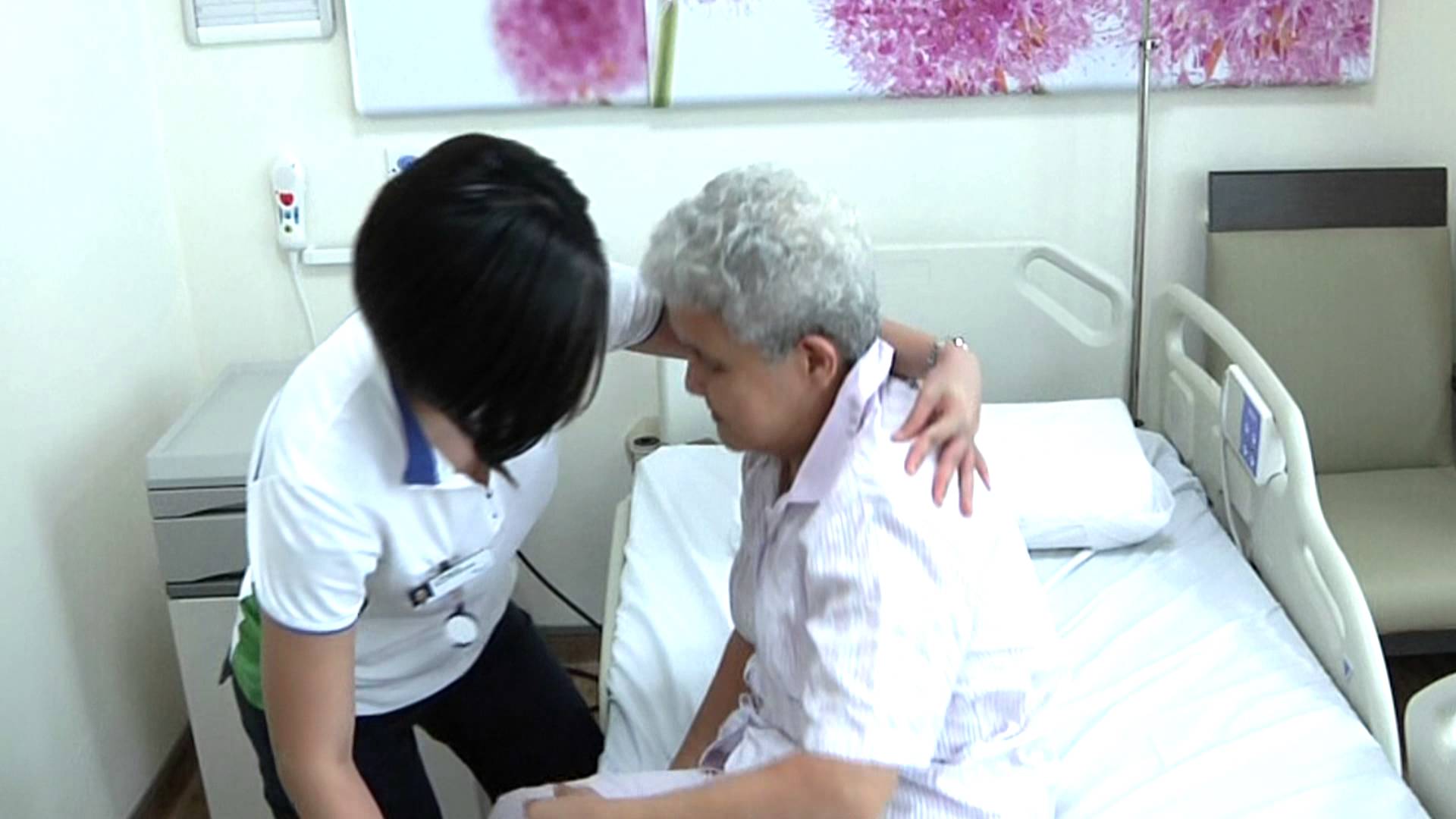
Recently a client contacted me to do training for their caregivers and it highlighted areas that caregivers need to know in their work.

So this month I am going to discuss becoming over involved.

The Risk Of Becoming Over Involved

Becoming over involved with clients/residents is a real risk and can have detrimental effects on the client/resident, their families and the caregiver.

Because once the relationship moves from carer to friend there can be many ramifications.

It is our professional boundaries define our responsibilities at work.

So what exactly are professional boundaries and why are they important? This short clip explains it well…

Professional Boundaries In The Healthcare Industry

The people you look after are vulnerable and open to exploitation.

So having professional boundaries is essential for their protection

It alos helps define the business you are in, it protects you and it helps the public know what they can expect from you.

This video explains why these professional boundaries are needed in our industry.

https://www.youtube.com/watch?v=gOHhCUWc0hw

Job Interference

Now I know it can be difficult to keep a relationship professional and not get attached to a client.

After all, when you look after a person for a long time you can become quite close.

They often share things with you and talk to you as a friend.

However, when you become over involved with your clients/residents it actually interferes with you being able to do your job.

Friends Vs. Residents

It may be that they start to expect special favors from you and expect you to do things, as you would for a friend.

These may be things that are not part of your job but could eat up a lot of your time.

…And because they think you are a friend you decide to give them special treatment.

It could also work the other way around where you could take advantage of them and their situation.

You tell your client little things about you and your life or family that takes your relationship over the line from being friendly to being friends and friends help each other don’t they?

Once this boundary is crossed it often leads to a slippery slope of disaster.

Safety First

Many people in care, be it at home or residential, become lonely.

A friendly face to take care of them makes their day.

Their professional caregiver may be the highlight of their day or week.

On top of this we all want to be liked – to feel special.

So to be told you are their favorite caregiver makes you feel good.

This can be sweet, or it can be a form of manipulation a person uses to get something they want.

So maintaining a boundary between you and the person in your care is paramount to keeping both you and your client safe.

Overstepping Boundaries

Now all of this may sound a bit harsh but you only need to become a victim to this sort of behavior once to realize the consequences it can have on the innocent.

Don’t ever put yourself in a position where boundaries are transgressed or violated.

Take a look at this video to help you understand a bit more about what boundaries are and how they can be transgressed.

Protect Yourself… Protect Your Residents

In order to protect both you and the client you need to maintain boundaries (as do all your caregivers).

If you think you can get away without being caught, think again.

Something is bound to happen to expose you…

And if the client/resident thinks they can get away with it, make sure they know they could end up with no carer at all if something goes wrong.

It is up to you, as the professional, to maintain a boundary between you and your client or resident.

Take your training to the next level… Get these printable Infection Control Protocols to share with your team and learn how to deal with 19 different infections & communicable diseases in your care facility.

Are Infections Plaguing Your Life?

by Leigh Kelly

Are Infections Plaguing Your Life?

Thinking about the rate of infections that seems to be plaguing us these days makes one wonder what the major cause of this happening is.

We have known for years that overuse of antibiotics has made some bugs resistant…

But could another contributing factor be to do with cleaning standards?

The Problem With Traveling

Now I don’t know if you are a traveler or not, but I hear so often how sick people become after taking a flight.They come back with a virus that they cannot shake.

This happened to me 2 years ago and I seem to hear more and more people in the same situation.

An article came across my desk that the reason for this was due to the quick turnaround of flights…

And the substandard (or should I say non-existent) cleaning that happens to get the plane back in the air again.

I Wouldn’t Leave My House This Way…

The rubbish is cleared but the table tops are not wiped down.

Nothing is done to them.

So you come along and sit down in your allocated seat and pull out your table when you are in the air or to eat.

You are not provided with anything to clean your hands, with the exception of some long haul flights particularly with Asian airlines who bring around heated hand towels.

Read More: The Gross Truth About Germs And Airplanes

Sharing Germs

Just think about it…

The person before you has some virus or bacteria.

They probably cough and splutter all around the space you are now occupying.

Without cleaning your hands, your table or arm rests you are then likely to contaminate yourself with whatever is left behind from the previous occupier.

This Happens Everywhere

Now if this is the problem with travel…

Could sub-standard cleaning be part, if not all, of the problems we are experiencing with superbugs?

I don’t know for sure but to me this stands to reason.

If the bugs are not being cleared from the surfaces, then you and those in your care are going to be at risk.

Sharing The Responsibility

As caregivers we know it.

But do we pass this knowledge on or teach others who do not have our backgrounds and knowledge?

Beyond The Training…

Okay, so a life of caring for children and other people may have set you up with the training you need to keep from getting ill.

But does the rest of the family and anyone that comes to visit understand the importance and the risk to everyone if cleaning standards are substandard?

How often do you reinforce hand washing?

This fun but very real video may bring a bit of a smile at the things we do every day unconsciously that can contribute to infections.

https://www.youtube.com/watch?v=HYeiNPIxqKw

Environmental Cleaning

However I want to focus now on environmental cleaning.

How much time is spent explaining the importance of keeping the environment clean?

How often are the tables, window ledges, beds etc wiped down?

I know when I did my training we had to do ward tidies at the clinic every day on the morning shift.

While we did not have to wash the floors, we were responsible for all the patients’ equipment and surfaces surrounding the patient.

And the same goes for homes where care is given.

Whose Responsibility?

Do we, as caregivers do this today or do we rely on someone else to do it?

How often do we check or observe that is has been done?

How likely is it that the surfaces surrounding your loved ones are harboring bacteria or viruses?

What Are Your Standards?

We know that when there is an outbreak it is likely to indicate a breakdown in cleaning standards.

How easy would it be if all the surfaces were cleaned daily with the expected outcome that the rate of infections would be reduced?

Remember, wherever a group of people live, there is likelihood of increased infections.

The Importance Of A Clean Environment

You see, we spend a lot of time talking about the importance of handwashing…

BUT do we spend the same amount of time on the importance of keeping the environment clean as well?

The following video is really good, but please note while most of the training is in English some of the conversations are in French with sub-titles.

It is 20 mins long but it does show how to clean and how important it is to do it correctly at a clinic, but it can be applied to your home as well:


Now this video by Bill Gates is looking at a worldwide epidemic.

He says “The next outbreak? We are not ready.” It is about being prepared and working towards prevention:

Be Prepared

How prepared are you for an outbreak in your home?

I am not necessarily talking about an Ebola outbreak, but a norovirus or influenza outbreak.

I have already talked about the importance of keeping surfaces clean and how this helps to contain or even prevent an outbreak.

Now in a hoe it is on a lesser scale to a worldwide epidemic but the principles are the same, as is the impact on people.

Have you considered how you could prevent an outbreak rather than react to a crisis?

It would be much easier for everyone if more attention was paid to reducing the likelihood of an outbreak in the first place.

Have a parent that’s a little hard to handle? Download our free Challenging Behaviors Guide to discover how you can figure out what’s going on and maintain the relationship with your parent.

Save

The 5 Levels Of Training Evaluation

by Leigh Kelly

The 5 Levels Of Training EvaluationI want to take the time to talk a little about evaluating your training.

Did you know that there are actually 5 levels that need to be evaluated?

To make sure the training is effective, these are the levels you should be assessing to know if what you’re doing is working or if you need a new solution.

Level 1

This level of evaluation is done immediately after a training session. You have probably all done these from time to time.

Emma Weber, the author of Turning Learning Into Action, calls these the “happy sheets”. They are the reaction type based evaluation.

Once the training is complete, take a look around the room to see how everyone feels. Happy? Exhausted? A little bit smarter hopefully?

Level 2

A little bit more in depth than Level 1, you need to find out…

What do participants know? What has the person learned from the training or retained from other learning?

Core competencies could come into this. By this I mean you send out an annual sheet for the staff to complete about what they know on a particular topic.

Or it could be you set a questionnaire at the end of an in-service – if you don’t already have one in the training session.

Level 3

This is the behavior-based level of evaluation, and where we start to get to the meat of training evaluation.

Even though many people stop after Level 2, this is where you really start to discover if your training is effective.

Ask yourself.. What are people doing differently as a result of the training?

Why do you need to ask this?

Because this is the glue that cements the learning.

This should really be the true aim of learning – to change or improve behavior.

And you need to know… did it happen in your training? With your staff?

Level 4

At Level 4 we take our evaluation to the big picture level.

What are the results of the training? What effect has the training had on the business or environment?

Level 5

And finally ROI, or Return On Investment.

What impact has the training had on the bottom line?

Back To The Glue…

Now I want to focus for a little on Level 3 because I think this is what can make the biggest difference to levels 4 and 5.

How can you measure this?

What can you do to find out what they have learned and not just from a competency assessment or worksheet that they do at the time of training, before or after?

The Power Of A Case Study

My suggestion is to set a group case study.

Divide the staff into groups of 4 or 5 and set them a task to explore from the learning they have just done or a real life experience that has happened in your facility/organization.

A Case Study Example

Complaints topic: Use a complaint you have received and get them to analyze the complaint (like you the manager or RN have had to do).

Go through the process of communicating with the complainant, write a letter to the person, examine how it could have been avoided and so forth.

This will make them more aware of complaints and enhance the learning.

Example 2

Sensory System – Vision: A client may have macular degeneration. As a Case Study, get them define clearly what it is and how they could make life easier for a person with it.

Include getting them to sit and talk to the client about it and how it affects them, and what they need to do to help them.

This would then give them a better appreciation of what it is like to have this condition.

Real Life Examples

There are no end of real life situations that happen in your facility or organization.

Make it a fun and practical exercise. Give them time to complete and present it to you or even at a staff meeting.

What better way to enhance the learning of your staff than use something they can relate to and begin to use immediately?

Need a head start in changing up your training? Get these printable Infection Control Protocols to share with your team and learn how to deal with 19 different infections & communicable diseases in your care facility.

Creating A Safe Workplace

by Leigh Kelly

Creating A Safe WorkplaceRecently I talked about collaboration in the workplace and the importance of camaraderie.

This week I want to extend this out to working with other businesses and how to make your workplace a safe place. If we work with others, the “whole is greater than its parts” as Aristotle says.

So What Does This Mean?

This means that the synergy we create by working together will bring greater results.

That is… Synergy is the creation of a whole that is greater than the simple sum of its parts according to Wikipedia.

How Synergy Works

So what am I talking about and how does this work? Well it is simple really.

If we all work together, whether it is in your own workplace or working with other workplaces then everyone wins. A collective action takes place that is picked up by the energy forces that can only create good and more for all.

Ok, so you think I am off my rocker? That’s okay! All I want you to do is expand your thinking.

And instead of looking inward in your business, look outside of it to see who you can work collaboratively with to create a synergy.

Synergy In Action

In 1909, Lester F Ward said “struggle is essentially destructive to social order and that social synergy, which is a form of cosmic synergy, the universal constructive principle of nature”.

An example of this co-operative power of nature is water. It is made up of two compounds that work together to create one of the essentials of life, water.

They are of course hydrogen and oxygen. This is synergy in action.

Synergy With Competitors

Now there are many such examples with nature. So if we are one with nature, why can it not work for us?

A synergistic partnership with your so called competitors can relate to all of you winning – the whole is great than the sum.

Synergy is the ability of a group to outperform even its best individual members. A cohesive group working as a team will get better results than one person working on their own.

Ask Yourself…

Are a leader in your organization that puts your people first?

Or are you an authority that puts yourself first?

Have you created a team that is willing to work with you or do they see themselves as working for you? Do you make your staff feel safe or so they fear you?

If you looked at your staff as if they were your child, would you fire them or even want to fire them? Do you sacrifice the people to save the numbers or save the people to save the numbers?

You Can’t Do It Without Your Team

The reality is that your people are your greatest asset.

All great leaders put their people first. They build an environment where people are safe and when they break the rules or make a mistake, they know they are not going to lose their job.

They know they are going to be coached and their job is safe, they are safe, their family is safe because they know they are going to be fed.

Take a look at this Ted Talk to see what I mean:

https://www.ted.com/talks/simon_sinek_why_good_leaders_make_you_feel_safe
(11mins)

Local Synergy

Group homes know this. The power of working together sets up a collegial environment, but this can also work locally.

Meeting with others from your area on a regular basis creates synergy, or an energy that works for everyone.

But are all managers in these groups’ leaders? Do you trust them or fear them? Do you feel safe or unsafe?

It is the leaders in your group or community that sets the tone that does the extraordinary in ordinary everyday situations.

The groups that meet do not have to be from the same organisation or industry. There is nothing to say that homecare organisations, residential care organisations, disability facilities/organisations, mental health, educators or health agencies can’t all meet up.

You all have something to contribute to the group. It comes to the power of the leader who sets up the group that is the key to its longevity.

Are you in a group like this? I am. It keeps me in touch with what is happening in the industry and I meet up with old friends too. So why don’t you get in touch with those around you and work together. You just never know what may eventuate from them.

Want to join Care Training Online?
Get started with these printable Infection Control Protocols that you can share with your team and learn how to deal with 19 different infections & communicable diseases in your care facility.
Benefits Of Camaraderie?

by Leigh Kelly

Benefits Of Camaraderie?One cannot underestimate the value of camaraderie. The more we value each other, the better we all work together.

It never ceases to amaze me how so few people actually get this concept.

The fact is if we do not feel what we are doing has some value to others (and ourselves), then our will to work collaboratively for the good of everyone just dissipates. It disappears.

The Unhealthy Result

We all needs friends be it at work or outside of work. It is part of human nature.

While work friends may be different to outside of work friends we all need people to talk to and to share the good, the bad and the trivial with.

If we cannot do this, we bottle things up inside and unhealthy stress is the result.

The Nature Of Bullying

Bullying also causes unnecessary stress.

This is usually done by people who have low self-esteem, feel insecure in their job, are pressured in their work by those above or believe they are better than they are at their job.

They try to compensate for their own insecurities or short falls in the belief that bullying someone else will make them feel more powerful, look better than they are or make them feel better…

When in actual fact, the opposite occurs.

You will never get anyone to work well or better through fear. It is not possible.

It just builds up resentment, anger, and frustration that works against you rather than for you.

Conflict In Your Organization

How do handle conflict in your organization?

Do you face conflict and deal with it or do you avoid it?

Do you let it fester or manage it?

Have a look at this video on transferring conflict into collaboration in healthcare:

The Importance Of Workplace Culture

So what sort of culture do you have in your workplace?

Is it a collaborative or divisive?

Is it one of universal respect or a dog eat dog mentality?

Is it one where everyone contributes and is respected for the contribution they make… where everyone wins or do you work on a lose, lose principle?

How To Turn It Around

Have you considered what makes people feel good about their work?

Well if you watch this video of the same name, just may make you consider your employees and or peers more (Really worth watching if you want to get the best out of your staff)…

Successful Groups

Now to follow on from camaraderie, let’s look at what makes successful groups.

Successful groups are those that have a high degree of social connectedness where people talk to each other and get to know each other. A group that fosters helpfulness because when the going gets tough it will be helpfulness that pulls you through.

A workplace that develops and fosters a culture of helpfulness is far more successful that a culture that rewards stars.

So developing camaraderie among your staff, where a culture of helpfulness and encouragement will give a company momentum and makes them robust.

What creates a successful group? Have a look at this video…

The answers may surprise you!

Get these printable Infection Control Protocols to share with your team and learn how to deal with 19 different infections & communicable diseases in your care facility.

  • « Go to Previous Page
  • Go to page 1
  • Interim pages omitted …
  • Go to page 7
  • Go to page 8
  • Go to page 9
  • Go to page 10
  • Go to Next Page »

Footer

Copyright © 2026 · Atmosphere Pro on Genesis Framework · WordPress · Log in